


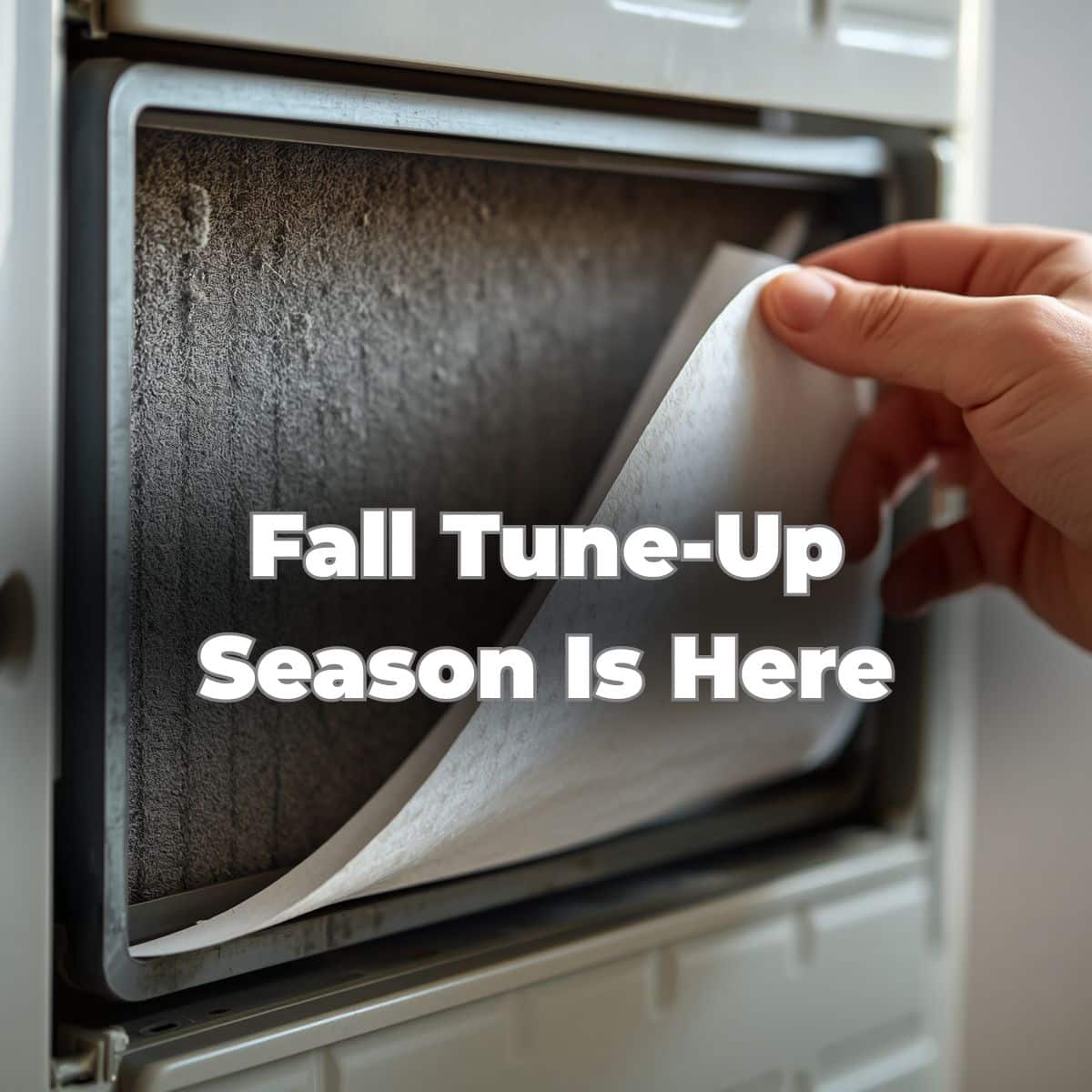
Here’s the short answer: September is the best time to schedule a fall HVAC tune-up because your heater hasn’t been asked to work hard yet, and HVAC companies still have open schedules before the first cold snap hits.
If you’ve ever flipped on your heat for the first time in October and smelled that burning dust smell, or worse, felt nothing but cold air, you already know why timing matters. Let’s talk about what a tune-up actually does, why doing it now saves you money, and what you can check on your own this weekend.
What is a fall HVAC tune-up?
A fall HVAC tune-up is a professional inspection and cleaning of your heating system before you start using it every day. A technician checks the parts that wear out, cleans the parts that get dirty, and tests the safety controls that keep your home safe.
For most homes, that includes:
- Inspecting the burners, ignitor, and flame sensor on a gas furnace
- Checking the heat exchanger for cracks that could leak carbon monoxide
- Testing electrical connections and tightening anything that’s loose
- Checking the blower motor and cleaning the blower wheel
- Testing the thermostat to make sure it reads and cycles correctly
- Checking the defrost cycle and refrigerant level on a heat pump
- Replacing or checking the air filter
It usually takes about an hour. Think of it like a physical for your furnace.
Why schedule it in September instead of waiting?
Waiting until you actually need heat is the most expensive way to find a problem. Here’s why September wins.
You get your pick of appointment times. Once temperatures drop, every HVAC company in Murrieta and Temecula fills up with no-heat calls. In September, you can usually book a time that works for you instead of taking whatever’s left.
Small problems stay small. A weak ignitor or a dirty flame sensor costs very little to fix during a tune-up. If it fails on the coldest night of the year, you’re paying for an emergency visit and spending the night in a cold house.
Your system runs more efficiently. A clean, properly adjusted system uses less energy to keep your home comfortable. The U.S. Department of Energy notes that swapping a dirty, clogged filter for a clean one can lower an air conditioner’s energy use by 5 to 15 percent, and a full tune-up goes well beyond the filter.
It protects your warranty. Many manufacturers require proof of yearly maintenance to honor a warranty claim. Skip it, and a covered repair could come out of your pocket.
It’s a safety check. Gas furnaces burn fuel inside your home. A cracked heat exchanger or a blocked vent can let carbon monoxide into your living space, and a tune-up is often the only time anyone looks for it.
How often should you get your HVAC system serviced?
Most manufacturers and ENERGY STAR recommend professional maintenance twice a year: once in the spring for cooling and once in the fall for heating. If you have a heat pump, it works year-round, so both visits matter even more.
What can you check yourself before the technician arrives?
You don’t need tools or training for these. They take about 15 minutes and help your technician focus on the bigger stuff.
- Change the air filter. Pull it out and hold it up to a light. If you can’t see light through it, it’s time for a new one.
- Test your thermostat. Switch it to heat and set it a few degrees above room temperature. You should hear the system start within a few minutes.
- Clear the area around your furnace. Move storage boxes, laundry, and anything flammable at least three feet away.
- Check your vents and registers. Make sure furniture and rugs aren’t blocking them.
- Test your carbon monoxide detectors. Press the test button and replace the batteries if needed. If you don’t have one near your bedrooms, now is the time to add one.
What are the signs your heater needs more than a tune-up?
Call a pro sooner rather than later if you notice any of these:
- A yellow or flickering flame instead of a steady blue one
- Rattling, banging, or squealing when the system runs
- Rooms that never seem to warm up evenly
- Heating bills that keep climbing even though your habits haven’t changed
- A system that’s 15 years old or more and needing repairs every year
If you ever smell gas, leave the house right away and call your gas utility from outside.
Frequently asked questions
How much does a fall HVAC tune-up cost? It depends on your system type, its age, and whether you have a gas furnace or a heat pump. The easiest way to get a clear number is to call Cool Air Solutions at 951-234-0748. If you’d like both seasonal visits taken care of, ask about the Comfort Club annual maintenance membership.
Is a furnace tune-up really worth it? Yes, for most homes. A tune-up helps prevent breakdowns, keeps your system efficient, protects your warranty, and checks for carbon monoxide risks.
How long does a furnace tune-up take? Most take 45 minutes to an hour and a half, depending on the system and how long it’s been since the last service.
Can I skip a tune-up if my heater worked fine last year? You can, but last year’s performance doesn’t tell you about parts that wore down over the summer. Most furnace failures show up during the first few weeks of heavy use.
Do I need a tune-up if I have a heat pump? Yes. Heat pumps heat and cool your home, so they run almost all year. A fall visit checks the defrost cycle, refrigerant, and electrical parts before winter.
Ready to get ahead of the cold?
The best time to find a heating problem is before you need heat. If you’re in Murrieta, Temecula, or anywhere in Riverside County, give Cool Air Solutions a call at 951-234-0748 or book online to schedule your fall tune-up while September appointments are still open.